




Discover 10 techniques to reduce nervousness when kids speak English, based on insights from 347 Novakid English teachers and research on language anxiety.


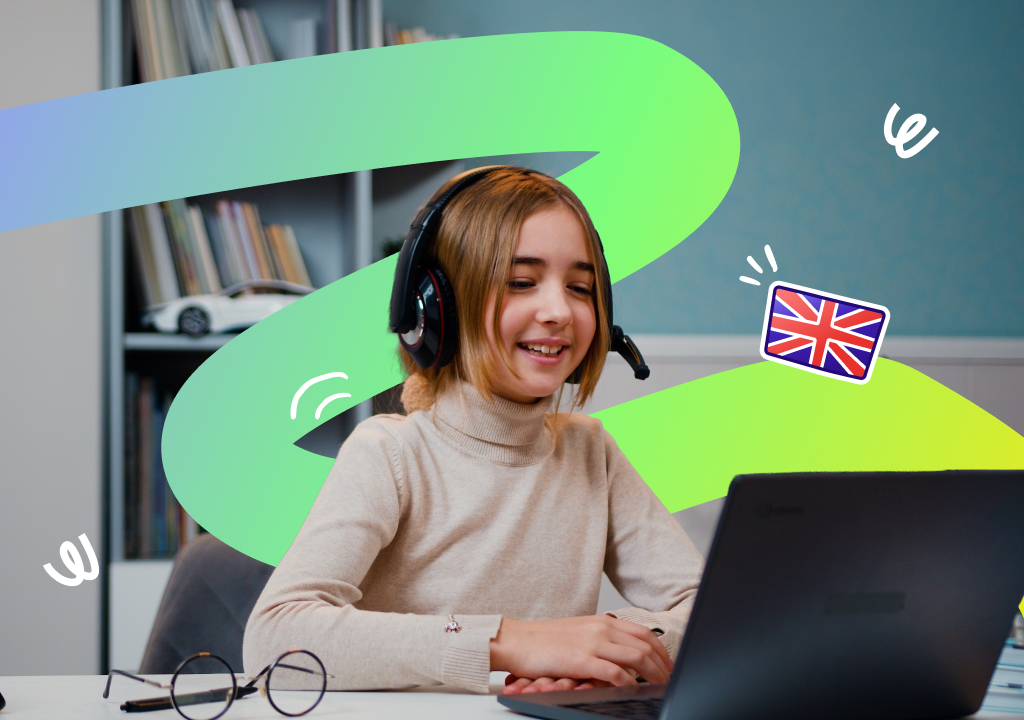

Finding the right format for your child’s English lessons can be overwhelming, especially when you’re stripped of time and clueless about the nuances of learning English online.
The good news is that one-on-one English lessons are a popular and effective format for children learning English. In fact, Meticulous Research expected the one-on-one learning segment to dominate the online language tutoring market in 2025—and that trend is likely to continue in 2026 and beyond.
In this blog post, we break down what one-on-one English lessons look like in practice, how they differ from group lessons, and offer insights from certified Novakid teachers on the benefits that individual lessons offer you and your child.
Let’s jump in!
One-on-one English lessons are English lessons where an instructor teaches an individual student rather than a group. Lessons take place in-person, remotely using video conferencing software like Zoom, or in a hybrid format.
One-on-one English lessons allow teachers to tailor instruction to your child’s unique needs and learning preferences, making instruction more relevant and effective for your child.
For example, an instructor who teaches individual lessons could identify your child’s English pronunciation challenges and provide targeted pronunciation practice. They could also build lessons around your interests. If your kid loves video games, the teacher can leverage game-based learning to make lessons more personalized and engaging.
If you’re considering one-on-one English lessons for your child, know that experts themselves vouch for individualized lesson formats. According to our survey of 133 Novakid teachers, 63.9% of respondents believe that individual lessons are the best format for children learning English.
You might be wondering, “What about group lessons?” Don’t worry—we’ll break down the difference between individual and group lessons next.
Sure, the main difference between one-on-one English lessons and group lessons is that one-on-one lessons are for individual students, and group lessons are for groups of learners (whether that’s four students or an entire classroom).
However, individual and group lessons also differ in cost, goals, structure, scheduling flexibility, and level of customization. Here’s a quick snapshot of these differences, with further explanation below:
One-on-One English Lessons vs. Group English Lessons | ||
|---|---|---|
| Category | One-on-One Lessons | Group Lessons |
| Format | Designed for individual student | Designed for multiple learners (small group, whole class) |
| Goals | Tailored to a student’s unique learning preferences, needs, and interests | Deliver the same lesson to all students for a shared learning experience |
| Cost | $15 to $50 per lesson | $6 to $20 per lesson |
| Structure | Focused on individual learning objectives with personalized activities and increased time for questions and speaking practice | Built around shared objectives with group activities and limited individual attention |
| Scheduling Flexibility | Highly flexible; sessions can be scheduled and rescheduled at a time that’s convenient for you and your child | Less flexibility; must align with group availability |
| Customization | Fully customizable based on the child’s level, pace, and learning style | Limited customization; same content delivered to all learners |
When asked about the pros and cons of both individual lessons and group lessons, Novakid teacher Ali Sullivan said that individual lessons allow her to focus on the child.
“I can go at their pace and use topics they enjoy,” she said. However, one-on-one lessons don’t allow for interaction with other kids.
Meanwhile, group lessons are “more fun and interactive,” helping kids build their language and social skills. But the teacher can’t give personal attention to every student. As a result, “Some kids might stay quiet or fall behind, while others take over, and the lesson has to move at a general pace,” said Sullivan.
Now that you know the difference between individual and group lessons, let’s explore the benefits of one-on-one English lessons in more detail—with help from certified Novakid teachers.
One-on-one English lessons tailor content and activities based on a student’s strengths and weaknesses.
If your child excels at conjugating verbs, the teacher can include advanced conjugation exercises to challenge them. If they struggle with describing basic objects, the teacher can use sentence starters to scaffold the activity.
According to Sullivan, individual lessons also allow teachers to incorporate your child’s interests and backgrounds.
“I ask about [the child’s] family, what they like to do for fun, their favorite games, shows, or even what they did that day,” she said. “Then I bring those things into the lesson so it feels more like a conversation than just learning from a textbook.”
Opting for individual lessons for your child affords you flexibility in scheduling. You can schedule lessons for after you pick your child up from school or after you get home from work. This ensures you’re present for your child’s learning.
At the same time, you can reschedule a lesson if your kid falls sick or just doesn’t feel like doing lessons that day. That way, your child can learn when they’re healthy, energized, and focused.
Introverted students may not thrive in group lessons because they fear asking questions or making mistakes in front of others.
But one-on-one English lessons allow your child to build a rapport with the teacher, helping them become more confident when asking or answering questions.
Sullivan witnessed this firsthand with one of her shy students. “In the group setting, [the student] was much quieter and didn’t speak as much. But in the one-on-one lessons, he was way more talkative and engaged,” she said. “It felt like he could relax more,” she added.
In group lessons, it’s easy for your child to sit back as other students answer questions or lead group activities. But individual lessons encourage your child to actively participate, whether that’s responding to a teacher’s questions or choosing answers on an online learning game.
Novakid teacher Rogen Garcia said that one-on-one lessons also increase student engagement by encouraging students to open up and “relate their lessons to their personal lives.”
She mentioned working with a shy eight-year-old who previously answered questions using vocabulary words from previous lessons. As she continued working with him one-on-one, the boy began to answer using real examples from his own life.
“When our topic was about pets, he began to talk about his own. When asked about the name of his pet, he took his time formulating his answer and used the proper possessive pronoun in his sentence,” said Garcia. “The student knew that he was in a safe learning space, so he took his time and confidently talked about his pet.”
Speaking is one of the key components of language mastery alongside listening, reading, and writing. While your child may not get extensive speaking practice in a large group, they’ll have ample time for speech production in individual lessons.
Ali Sullivan saw a vast improvement in one of her students’ skills after making time for targeted speech practice. “[The student] started speaking more freely, and what really stood out was that she began correcting herself and asking helpful grammar questions on her own,” she said.
In group lessons, your child may fall behind the group or have to wait while other students work on skills your kid has already mastered. This can slow down their progress.
But with individual English lessons, your child can spend more time on their specific challenges in one area and advance to more challenging topics in areas where they excel.
Research supports this, with a 2025 Preply and Leanlab Education study finding that one-on-one language learners progressed three times faster than standard benchmarks.
Garcia said she can “attest that students who are enrolled in individual classes progress faster than their peers in group classes.” For example, she mentioned having a student who joined individual and group lessons.
“Compared to his peers in the group lesson who weren’t enrolled in individual lessons, he read faster, answered questions more confidently, and even led group activities in class,” said Garcia.
While generic comments like “joy to teach” and “very hardworking” will make you proud of your child, they won’t help them improve their performance. Luckily, one-on-one English lessons allow teachers to provide more detailed and actionable feedback to your kid.
For example, instead of giving the vague feedback “needs to work on verbs,” Garcia instructed a struggling student to practice the verb “to be” with pronouns and emotions.
She also provided the following concrete examples and exercises so the student could apply the feedback, advising the learner to “fill in the correct form of ‘to be’ (‘am, ‘is,’ ‘are’)”:
| Example Sentence | Practice Exercise |
| “I am happy.” | “I __ happy.” |
| “He is tired.” | “She __ tired.” |
| “We are hungry.” | “They __ hungry.” |
The best platforms for one-on-one English lessons offer personalized, structured, and highly interactive lessons from certified teachers. Below, we look at which ones check all the boxes.
According to Ali Sullivan, who has taught for three different online companies for the past eight years, Novakid is the best platform for one-on-one English lessons because of its ideal lesson length and clear lesson structure.
“The lessons are shorter than the 45-minute classes I used to teach, which helps kids stay focused. I also like that there are consistent characters and storylines throughout the lessons, so there is a clear flow instead of random practice each time,” she said.
Sullivan also cites Novakid’s level and certificate system, which allows kids to see and feel rewarded for their progress.
So, what does an individualized English lesson look like? Rogen Garcia gave us a detailed breakdown of the lesson plan she uses for her one-on-one English lessons.
“I believe that the structure I use is effective because the lessons flow naturally and are easy to follow,” she said. “This can cause less distraction in class and make students less confused and more confident.”
| Lesson Stage | What It Looks Like |
| Warm-Up | Teacher greets the student and engages them in 2-3 minutes of conversation about the student’s day or interests. |
| Introduction | Teacher introduces the vocabulary or grammar topic. |
| Practice | Student demonstrates their understanding of the vocabulary or grammar topic by engaging in a role-playing exercise, completing a communication task, or doing a different activity. Teacher provides scaffolding as needed. |
| Cooldown Activity | Teacher wraps up the lesson and incorporates educational games, if time permits. |
| Closing | Teacher says goodbye to the student and assigns homework. |
One-on-one English lessons offer your child more than personalized instruction and attention from their teacher. They also boost your kid’s confidence, accelerate their progress, and increase their speaking time, while granting you the scheduling flexibility you need as a busy parent.
However, not all online learning platforms provide the high-quality English lessons you’re looking for. That’s why we recommend signing your child up for lessons with Novakid’s certified and native English-speaking teachers.
Our lessons are highly personalized and interactive, and proven to help your child reach fluency 2x faster. See for yourself by booking a trial lesson today.


The average cost of private English tutoring online is $15 to $50 an hour, with higher fees for extended lessons or lessons taught outside of standard teaching hours.
Popular one-on-one activities for ESL classes include 20 Questions (asking a student 20 English questions about a topic), the A-Z Game (instructing a student to come up with topic-related English words for different letters of the alphabet), Pictionary, and Simon Says.
Ask your child’s school teacher for recommendations, verify the instructor’s teaching credentials and English expertise, read verified reviews from parents, and interview them to determine if they’re the right fit for your child. To make things easier, use an online English learning platform like Novakid to find online English teachers with recognized credentials (B.Ed, TEFL, TESOL, CELTA, etc) and experience teaching children.
Discover 10 techniques to reduce nervousness when kids speak English, based on insights from 347 Novakid English teachers and research on language anxiety.
Explore what research and teachers say about homework AI, the pros and cons of homework, and why kids need lighter tasks and smarter use of AI.
Find out what research and Novakid teachers say about the limits of learning a language by immersion, how language listening alone fails, and why structured teaching and practice turn exposure into fluency.
Discover how AI is transforming English learning. Explore the benefits of 24/7 tutoring, the risks of cognitive atrophy, and the future of education.

Insights from English teachers on children’s speaking confidence, vocabulary retention, home practice, AI and the role parents play in language learning.

See what 130 teachers say about how to track your child’s progress in English and how to set realistic expectations for learning and fluency.
We and our partners use cookies to improve your experience, personalize content and ads, and analyze traffic. By clicking 'Accept all', you agree to our use of cookies in accordance with the Cookie Policy.
You can personalize your choices by clicking on 'Cookie settings'.
We use four types of cookies on our website. You can learn more about cookies and how we use them here: Cookie Policy
Strictly necessary
Advertising
Analytics
Personalization