



Correct pronunciation is as important as vocabulary and grammar when learning English. However, children often need assistance to improve their pronunciation. This is where Novakid can play a big role in your child’s English development.



It’s exciting to see your child embark on their English learning journey. But at some point, you’ll probably ask yourself, “How long does it take to learn English?”
It’s a valid question since having a precise proficiency timeline will help you track your child’s progress and stop worrying about whether they’re behind schedule. That said, a precise timeline is hard to come by, especially when you consider that adult and child language learning differ.
The good news is that this blog post provides a clear timeline for when your child can expect to be fluent in English. Read on for what your child’s path to proficiency will look like, when they’ll reach each milestone, and what to do in the meantime to speed up their progress.
It takes three to five years for a child to become conversationally fluent in English and four to seven years for them to develop fluent academic English. That’s according to a report by the University of California Linguistic Minority Research Institute.
That said, a survey of 133 Novakid teachers found that 51.1% of respondents believe students can still gain a solid foundation in English in just three months, even if actual English fluency takes longer.
This is especially the case for children who learn and practice English regularly. The survey found that 53.4% of teachers recommend that children have three to four English practice sessions each week to start speaking English.
Aside from regular practice, various factors can affect how quickly your child learns English (their first language, language immersion, etc.) Still, most kids go through six stages when learning English as a second language, which you can easily track using the timelines provided in the next section.
Now that you have a timeframe for when your child will reach fluency, you can move from asking “How long does it take to learn English?” to asking “What does the road to fluency look like?”
Here are the six second-language acquisition stages your child will go through as they move from absorbing English to using it proficiently.
| Second-Language Acquisition Stage | Duration |
| Pre-Production | 0-6 months after initial English exposure |
| Early Production | 6-12 months after initial English exposure |
| Speech Emergence | 1-3 years after initial English exposure |
| Beginning Fluency | 2-4 years after initial English exposure |
| Intermediate Fluency | 3-5 years after initial English exposure |
| Advanced Fluency | 5-7 years after initial English exposure |
Stage duration: 0 to 6 months after initial English exposure In the pre-production stage or “silent period,” your child may not speak English at all. Instead, they’ll absorb the language and either offer non-verbal responses or responses using high-frequency words like “yes” or “no.”
At this stage, your child’s receptive vocabulary (the spoken words they understand) will include up to 500 English words. Guide them toward speaking English by asking simple questions and using prompts like “What is this?” while pointing to objects.
Stage duration: 6 to 12 months after initial English exposure
In the early production stage, a child starts offering one- and two-word responses in English more frequently. They can understand key ideas and words and use familiar phrases. At this point, they have a vocabulary of 1,000 basic English words.
Help your child out by asking them “yes/no” questions and encouraging them to repeat new and familiar English phrases in context.
Stage duration: 1 to 3 years after initial English exposure
During the speech emergent stage, your child balances both expressive and receptive language. They can use short sentences and ask questions in English but will make errors when communicating.
Your child can also understand the main idea of text, and their receptive and expressive vocabulary will expand to roughly 3,000 words.
To guide your child toward fluency from this stage, ask them longer “why” and “how” questions and model correct language usage.
Stage duration: 2 to 4 years after initial English exposure
The beginning fluency stage is where your child starts speaking fairly fluently in English, particularly about familiar topics. However, they may have trouble finding the right word or phrase when discussing new topics.
Your child’s speech at this stage includes simple and complex sentences, with some grammar and pronunciation mistakes. Their vocabulary also reaches 3,000 words.
Continue asking your kid longer “why and how” questions, and engage them in short conversations about familiar topics. Correct errors and model proper language usage.
Stage duration: 3 to 5 years after initial English exposure
By the intermediate fluency stage, your child can use English effectively in familiar situations and can navigate new situations and topics appropriately. They have excellent English comprehension skills and can confidently learn academic subjects in the language.
Your child’s receptive and expressive vocabulary reaches about 6,000 words. Strengthen their English by helping them build their academic vocabulary, holding detailed conversations with them, and having them summarize reading material.
Stage duration: 5 to 7 years after initial English exposure
A child who has reached the advanced fluency stage can speak English almost like a native speaker. They can use the language in various academic and social contexts and will make fewer errors.
Your child can also learn new academic concepts as well as they can in their first language, and their English vocabulary will reach 10,000+ words.
At this point, you should expand your child’s knowledge of English idioms and other common expressions, continue building their vocabulary through reading activities, and help them refine their speaking and writing skills.

Besides using the time durations associated with each stage of second-language acquisition, there’s another way to figure out how long it’ll take for your child to learn English.
And that’s by using the estimated hours required for a child to reach various CEFR (Common European Framework of Reference for Languages) English language proficiency levels.
The following tables include time estimates from the Cambridge University Press. The estimates are for primary school children (ages 4 to 11) learning English as a foreign language.
(Note: The Cambridge University Press time estimates exclude the C1 and C2 levels.)
| CEFR Level (English) | Number of Hours of Instruction |
| Pre-A1 | 160-200 hours |
| Pre-A1 to A1 | 180-240 hours |
| A1 to A2 | 200-240 hours |
| A2 to B1 | 240-300 hours |
| CEFR Level (English) | Number of Hours of Instruction |
| Pre-A1 to A1 | 340-440 hours |
| Pre-A1 to A2 | 540-680 hours |
| Pre-A1 to B1 | 780-980 hours |
The factors affecting your child’s English learning timeline include:
We break down each of these variables below.
The greater the difference between a learner’s first language and the target language, the longer it’ll take for the learner to master the new language—in this case, English.
For example, children whose first language differs substantially from English in writing systems and structure (e.g., Arabic and Japanese) may need 30 to 50% more time at each language level or acquisition stage.
The critical period hypothesis (CPH) theory posits that learners can achieve a native-like fluency in a language during the period between birth and puberty (or up until the ages of nine to 16).
After that period, learning English and other languages is more difficult and can take longer.
When children are regularly exposed to English through media and conversation, the language connections in their brains strengthen. This promotes natural English language development over time.
Having your child use English in everyday situations (at restaurants, malls, and in school) also helps them lock in the language faster because learning becomes real, not just theory.
Poor or inconsistent English language instruction can slow down your child’s progress or, worse, undermine their language learning altogether. For example, instruction that emphasizes rote memorization fails to build real-world English communication skills.
And a one-hour practice session every other week is insufficient when 53.4% of teachers say three to four sessions per week are necessary if you want your child to speak fluent English.
If you want your kid to reach English fluency faster, follow the tips we have below—from creating a dedicated study plan to signing them up for Novakid’s expert-taught English classes.
When a parent asks, “How long does it take to learn English?” in regard to their child, they don’t expect three to five years to be the answer.
While that can feel like a long time and a lot of work, you and your kid don’t have to feel overwhelmed. There are invaluable resources in place that will take the load off your plate and help your child become fluent in English much sooner.
One such resource is Novakid’s online English classes. Our English-only classes are taught by certified, native-speaking teachers. Your child will receive personalized lessons that are tailored to their specific strengths and weaknesses and that reinforce their learning through games.
Sign up for a free trial lesson today for a seamless start to your child’s English learning journey.


Being fluent in English means your child can understand, speak, read, and write confidently in the language in everyday and academic situations.
Yes, a 5-year-old can become conversationally fluent in English if you begin immersing them in English as soon as they’re born. Academic fluency may take longer and will require guided learning from a teacher.
Most children cannot become fully fluent in English in just three months. However, a survey of 133 Novakid teachers found that 51.1% of respondents believe that children can gain a solid foundation in the language within that time frame—through regular practice and quality lessons.
Language learning generally becomes more challenging after the period between birth and puberty. Even so, children and adults can still successfully learn English with consistent practice and high-quality instruction.
Research shows most children need about 3 to 5 years to develop fluent conversational English and 4 to 7 years to develop fluent academic English. The actual timeline depends on factors such as age, native language, immersion, learning quality, and learning consistency.
It takes a child 3 to 5 years to become a fluent speaker of the language and 4 to 7 years to develop academic proficiency. An adult beginner can become fluent in a language (B2 level) after 700-950 hours of instruction.
Correct pronunciation is as important as vocabulary and grammar when learning English. However, children often need assistance to improve their pronunciation. This is where Novakid can play a big role in your child’s English development.

This Novakid article reveals why some children learn English faster than others — from personalised attention, to confidence, consistency, and cognitive style.
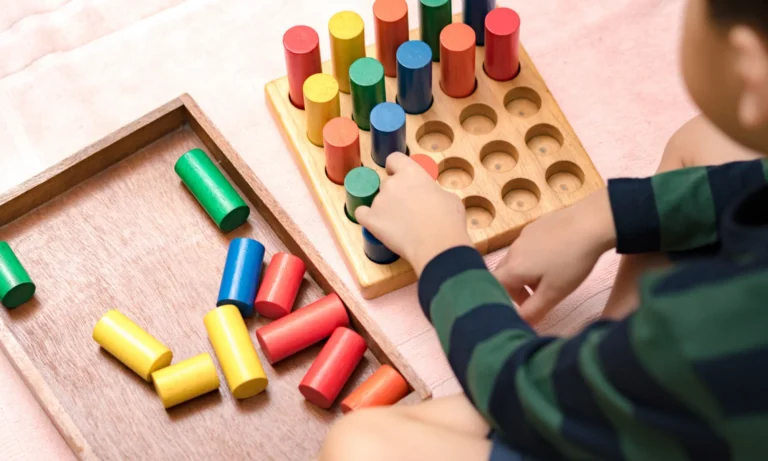
If you are a parent, you have probably heard about the Montessori Method many times in relation to a kindergarten or a school for your child. Let's see what is it and why is it so popular?

The article briefly describes learning disabilities and mentions how to help children with LDs
What happens when teachers, not algorithms, shape learning? Discover what educators and research reveal about AI English learning, and what it means for children.
How to teach time management? Find out Top 10 daily time management ideas for kids. Help your kid with development of time management skills.
We and our partners use cookies to improve your experience, personalize content and ads, and analyze traffic. By clicking 'Accept all', you agree to our use of cookies in accordance with the Cookie Policy.
You can personalize your choices by clicking on 'Cookie settings'.
We use four types of cookies on our website. You can learn more about cookies and how we use them here: Cookie Policy
Strictly necessary
Advertising
Analytics
Personalization