Discover the ultimate resource for educators! Our guide delves into effective teaching methods tailored for children's language education. Create engaging and impactful learning experiences for young language learners.


Discover if old-school grammar and homework are still effective for children learning English, or if these methods are outdated in the modern digital classroom.
Read more
Discover the ultimate resource for educators! Our guide delves into effective teaching methods tailored for children's language education. Create engaging and impactful learning experiences for young language learners.

Sign up for a trial English lesson at Novakid

Discover the most effective study techniques for lasting learning. Explore active learning strategies, effective learning techniques, and research-backed methods that help children build long-term English skills.
Learn how Novakid teaches A1 and A2 levels and what it means for children aiming for higher English levels.

Explore the benefits of hybrid learning models in English education. Understand what hybrid learning means, its advantages, and how it supports ESL students with flexible, tech-enhanced lessons.
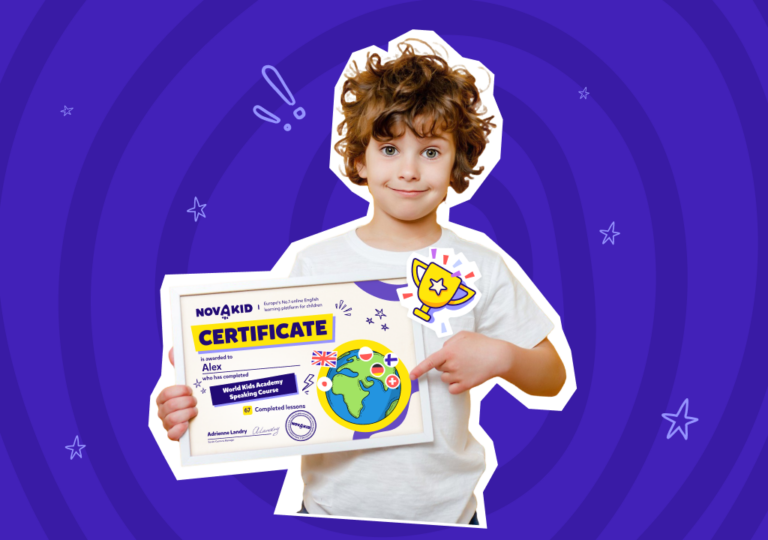
Find out if Novakid offers certificates after course completion and what they mean for your child’s English learning.

Discover how AI is transforming English learning. Explore the benefits of 24/7 tutoring, the risks of cognitive atrophy, and the future of education.

Discover how English songs, cartoons, and games help children learn faster. Explore fun and effective ways of learning English for children through play, music, and interaction.

Interactive games, role-play, songs, repetition, storytelling and much more! Find out which teaching methods work best for teaching English to children online.

Is it possible for a child to master English in just three months? We dive into the scientific reality of language acquisition timelines vs. popular expectations.

It is believed that children learn foreign languages easier than adults. But how do they actually go through the process of acquiring a new language? And how does this process differ from adults?
Explore what research and teachers say about homework AI, the pros and cons of homework, and why kids need lighter tasks and smarter use of AI.
We and our partners use cookies and similar technologies to improve your experience, personalize content and ads, and analyze our traffic. By clicking ‘Accept all’ you agree that your personal data and cookies may be used for ad personalization, including sharing with Google. For more information, read our Privacy Policy and Google’s Privacy & Terms.
You can personalize your choices by clicking on ‘Cookie settings’.
Find more information about what cookies are and how we work with them in our Cookie policy and Privacy policy
Strictly necessary
Advertising
Analytics
Personalisation


