



What happens when teachers, not algorithms, shape learning? Discover what educators and research reveal about AI English learning, and what it means for children.

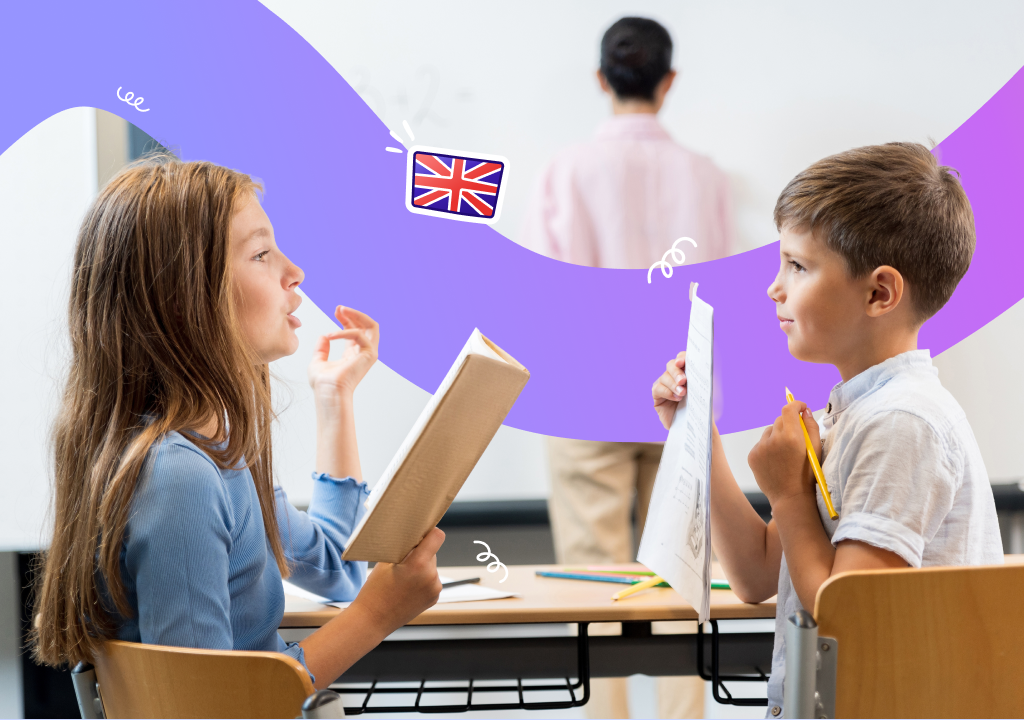
We have all heard the following story: “I sent my son to study abroad, and in just three months, he sounded like a native speaker! Children really are like sponges”. Hearing this story, it is normal to ask yourself: “Can a child become fluent in a language in just three months?”. At Novakid, we answer this question.
This narrative has become the gold standard for family expectations. There is a widespread belief that childhood is a magical window where effort is minimal and results are immediate. However, the spread of the 3-month myth can be a double-edged sword, as it can deepen the frustration of parents and students who feel they have not achieved the goals they are supposed to achieve in that period.
Although it is true that children have greater brain plasticity, language acquisition is a cumulative process that depends on factors that the three-month myth ignores: cognitive load, emotional environment, and the difference between “repeating” and “understanding”.
Faced with this situation, science is categorical: the sponge metaphor is biologically incomplete.

To understand what science says about the debate over whether three months is enough time to become fluent in a language, we must begin by mentioning Jim Cummins.
This distinguished professor developed a theory that distinguishes between two important concepts that help us better understand what we mean by “fluency”: BICS (Basic Interpersonal Communication Skills) and CALP (Cognitive Academic Language Proficiency).
With this classification, Jim Cummins was able to explain why language learners may appear fluent in everyday conversation but struggle with complex academic language.
Let’s look at an example: if a child moves to a foreign country, within three months, they will most likely master BICS (the language of play and social interaction) simply because their brain is biologically programmed for natural acquisition. Teachers may mistakenly think that the child is already “ready” for the academic demands of the classroom. Even if the child is socially fluent, it will take 5 to 7 years to reach CALP (the language of textbooks, math, and literature). If the education system ignores this gap, the child may fall behind despite “speaking” the language at recess.
For this reason, we must be careful not to mistake speed for mastery. Recent research, such as Second Language Acquisition and Neuroplasticity, shows that while a child’s brain is like a sponge which is capable of reorganising itself quickly to pick up sounds and social cues, deeper “wiring” is required for complex thinking. The CALP we mentioned cannot be rushed. Neurobiologically, your child is building a foundation in those first 90 days, but that foundation needs years of steady practice to become a solid, permanent structure.
Therefore, true fluency isn’t just about knowing words; it’s about “automation”. Think of it like learning to ride a bike: in three months, a child learns to balance (i.e. BICS), but it takes much longer to become a pro who can navigate complex traffic and perform tricks without thinking (i.e. CALP). Science tells us that those first few months are a wonderful, magical starting line, but for your child’s academic and cognitive success, the real marathon is the years of daily, joyful exposure that follow.
Teachers are responsible for a difficult task: dealing with parents’ expectations and managing their students’ frustration. Setting an unrealistic goal can be extremely harmful to students.
In a study conducted by Novakid, 133 teachers were asked about the three-month myth for mastering English and what their opinion was on the matter.
When asked, “Can a child speak English fluently in just three months?”, 89.4% of the teachers surveyed said that, although children can acquire a solid foundation and confidence in that period, it takes longer to speak fluently. This data puts into perspective the educational task of managing expectations held by parents.
“In three months of learning English, a child can make remarkable progress, but it is important to have realistic expectations. Most children can learn basic vocabulary, phrases, and begin to form sentences. They can gain confidence in talking about familiar topics and following instructions. However, fluency and grammar usually take longer, so parents should focus on steady improvement, confidence, and enjoyment of the process, rather than expecting rapid mastery,” says Ali Sullivan, an English teacher at Novakid.

Here’s the surprise: there is no set time for a child to become fluent in a language. It depends on each individual, how much time they devote to it each week, their level of immersion, and their own unique cognitive abilities. Instead of looking for a magic number on the calendar, think of it as a journey through three distinct milestones:

In this article, we have seen that the “three-month fluency” promise is a myth that confuses social confidence with academic mastery. By bridging the gap between rigorous scientific studies and the daily insights of experienced educators, we have seen that while a child can break through the fear of speaking and master basic social interactions in just a few months, true academic fluency is a marathon that takes years of steady, joyful practice.
Did you find this interesting? Visit the Novakid blog and learn more about how to teach English to your child effectively!


While children are neurobiologically “primed” to pick up sounds and social cues quickly, mastering a language involves complex cognitive tasks. The myth confuses social confidence (being able to play and follow basic instructions) with linguistic mastery (the ability to handle academic subjects and complex thoughts).
In three months, most children will master BICS (Basic Interpersonal Communication Skills). They will learn basic vocabulary, common phrases, and how to follow simple instructions. More importantly, they gain the confidence to try speaking without fear, which is a vital “launchpad” for the years to come.
Social fluency (BICS) is contextual; it relies on gestures and everyday situations (like asking for a toy). Academic fluency (CALP) is the “language of textbooks”. It requires precision, a vast vocabulary, and the ability to understand abstract concepts without visual help. CALP takes significantly longer to develop.
The key is to focus on steady improvement and enjoyment rather than a deadline. As Ali Sullivan from Novakid suggests, celebrate the small wins—like when a child uses a new word independently or follows a complex instruction—rather than waiting for a “magic” moment of total fluency.
Not at all. In fact, science suggests that “slow and steady” is the biological norm for deep learning. While some children might rapidly pick up a few social phrases (the “sponge” effect), building the neural highways required for academic fluency takes time.
What happens when teachers, not algorithms, shape learning? Discover what educators and research reveal about AI English learning, and what it means for children.
Explore what research and teachers say about homework AI, the pros and cons of homework, and why kids need lighter tasks and smarter use of AI.
Discover how attention spans and screen fatigue affect children’s learning, and which strategies help maintain focus in online English lessons.
Individual or group lessons? Online or offline classes? Study with a tutor or an app? Exploring the benefits of one-on-one lessons over other types of classes.
A survey of over 130 English teachers reveals why English classes still matter for kids in the age of AI.
Discover how AI is transforming English learning. Explore the benefits of 24/7 tutoring, the risks of cognitive atrophy, and the future of education.
We and our partners use cookies to improve your experience, personalize content and ads, and analyze traffic. By clicking 'Accept all', you agree to our use of cookies in accordance with the Cookie Policy.
You can personalize your choices by clicking on 'Cookie settings'.
We use four types of cookies on our website. You can learn more about cookies and how we use them here: Cookie Policy
Strictly necessary
Advertising
Analytics
Personalization