



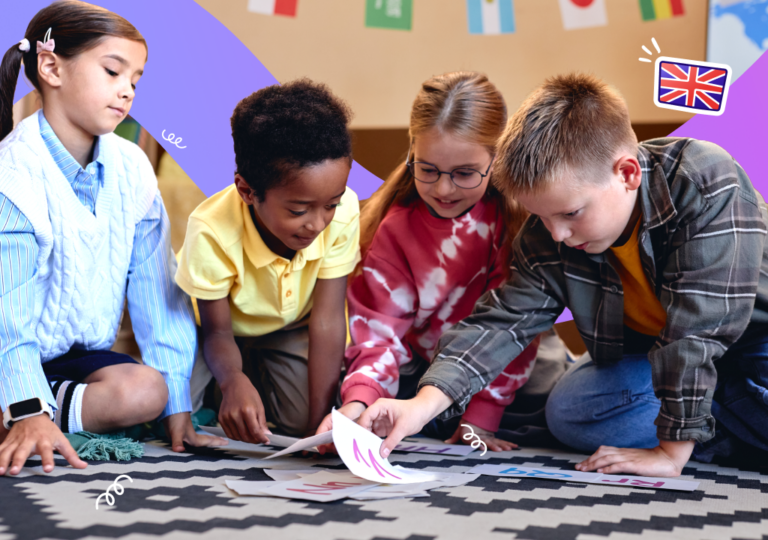
It is believed that children learn foreign languages easier than adults. But how do they actually go through the process of acquiring a new language? And how does this process differ from adults?



For decades, teaching English to young children has been synonymous with memorizing endless lists of verbs, repeating grammatical structures, and doing homework in addition to classwork. However, in recent years, there has been a growing number of voices and approaches seeking to break away from this traditional method of teaching English to young children, arguing that it is possible for children to master English without homework or grammar drills.
Today, it’s common to find classrooms filled with games, tablets, and songs where emotional well-being and fluency are the top priority. Given this situation, at Novakid we ask ourselves: Is it possible to learn English without homework and without studying grammar?
To answer this question, we’ll draw on scientific studies and the insights of Novakid teachers to help us explore the fine line between a “fun” class that doesn’t teach and a “strict” class that doesn’t motivate, seeking the balance where old-school rigor meets the needs of the 21st-century child.


Grammar has always been the foundation upon which English language learning has been built in the traditional model. From mastering the present simple to more complex forms, grammar is highly valued in the more traditional model for its ability to structure language learning. However, today we are witnessing the emergence of methods and courses that embrace a model rejecting this dogma and advocating for “natural acquisition”—similar to how we learn our native language—in which grammar plays a much smaller role.
The science of language learning has studied this issue in depth and has expanded the debate beyond the “grammar yes” or “grammar no” dichotomy. Studies such as Age and learning environment: Are children implicit second language learners? have shown that children can indeed learn structures of a foreign language even without receiving explicit grammatical explanations. However, this process of implicit learning also has its limits. This is confirmed by other research, such as that of Nick Ellis, a leading Welsh psycholinguist and professor emeritus at the University of Michigan, renowned worldwide for his research into second language acquisition, which indicates that mere exposure does not always guarantee complete acquisition. The conclusion of this study is that without mechanisms to direct attention toward specific language structures, students may internalise certain grammatical errors over time.
And what do English teachers think? In a study conducted by Novakid, 133 English teachers were asked about this topic. 59.4% maintain that grammar can only be partially ignored, while 31.6% are more emphatic, stating that it is impossible to master the language without a solid grammatical foundation.
“Everyone can learn English without formal grammar instruction. But effectively? That might be questionable or hard to achieve. For instance, many children became good at English after being exposed to online English videos. However, their lexicography is limited, and their grammar is not always correct. Having a formal grammar class can help correct common mistakes and help widen their vocabulary”, says Rogen Garcia, a Novakid teacher and one of the teachers surveyed.
Therefore, scientific studies and Novakid teachers agree: it’s not about eliminating grammar, but about transforming it. Moving from abstract explanations of rules to strategies that promote conscious learning, in which the structure of the language becomes visible within real communicative contexts, helping children discover how English works without sacrificing fluency or motivation.
The usefulness of homework is probably one of the most contentious issues in education today. Many courses and instructors promise results without resorting to what they consider an outdated method. However, this approach is far from the norm.
According to the study launched by Novakid, only 9% of teachers believe that children can completely do without homework in their learning process. This data suggests that, for professionals, independent practice remains an indispensable reinforcement for consolidating what has been learned in class.

Learning a language is a psychomotor skill, just like playing the piano or tennis. It requires constant exposure. And this is something that science confirms. The experimental study The learning effects of student-constructed word cards as homework for the adolescent English Language classroom compared high school students who were learning English:
The results? The group that did homework significantly improved their English vocabulary and reading comprehension compared to the group that did not do homework.
Why are there critics of homework if the results are so conclusive? This is largely due to the mistaken association we make when we think of homework. We imagine that homework is just “do page 20 of the workbook”; however, there are numerous and varied activities that bring English into a child’s daily life. Old-school homework is, indeed, obsolete. But practice outside the classroom is indispensable.
It’s very rewarding to ask our child, “How did your English class go today?” and hear that they had a “great time playing”. However, as parents, we sometimes have a natural doubt: Is it possible to learn a language just through games? The reality is that playing for the sake of playing is entertainment, but playing with a strategy is high-level education. If the class is just a party, English stays on the surface. For your child to truly master the language, fun must be the “Trojan horse” that introduces, almost without them realising it, the effort, repetition, and structure so championed by the old school.

A child gets bored if the class is a list of boring rules, but they also tune out if everything is so easy that they don’t have to make an effort. The magic happens when the game forces them to use their brain. That little “effort” is what makes the brain commit the word to memory forever.
So, as parents, what should we choose? Grammar or no grammar? Homework or no homework? Success lies in balance: the child’s natural rhythm, but with clear guidance that corrects them and presents challenges, just as we do at Novakid.
English language instruction is constantly evolving, with established tools and methods continually being challenged by emerging technologies, research, and trends. As parents, it can sometimes be difficult to know what’s best for your child. The key isn’t to choose one extreme or the other, but to find a method that combines the necessary structure with the motivation that today’s children need to stay engaged. The best way to understand this balance is by experiencing it firsthand: sign up for a free trial class and discover everything Novakid has to offer!


Yes, children are excellent at “implicit learning”, meaning they can absorb patterns just by listening. However, experts and Novakid teachers agree that some formal guidance is necessary to correct common mistakes and help them move beyond basic vocabulary to a more professional level.
Language is a psychomotor skill that needs regular exercise. Homework acts as an essential reinforcement. Recent studies show that students who engage with the language at home—even for short periods—show much better reading and vocabulary skills than those who only study English during class time.
The key difference is the type of homework. Traditional “old-school” homework—like repetitive grammar drills—can be exhausting. However, modern practice focuses on bringing English into daily life through interactive activities.
The traditional method often focused too much on silent memorisation and rigid rules, which can kill a child’s motivation and lead to “fear of speaking”. Modern approaches like Novakid’s take the rigor of the old school but wrap it in an engaging, interactive digital environment.
Look for “productive results”. If your child can explain a game rule in English, use a new verb correctly to win a point, or feels confident trying to speak even with mistakes, the fun has a pedagogical strategy behind it.
It is believed that children learn foreign languages easier than adults. But how do they actually go through the process of acquiring a new language? And how does this process differ from adults?

At Novakid, our native-speaking teachers come from the USA, the UK, Ireland, South Africa, the Philippines and other countries all over the world.

Does your child hate learning English? Discover research-backed strategies to overcome learning resistance, motivate reluctant learners, and make English fun again.
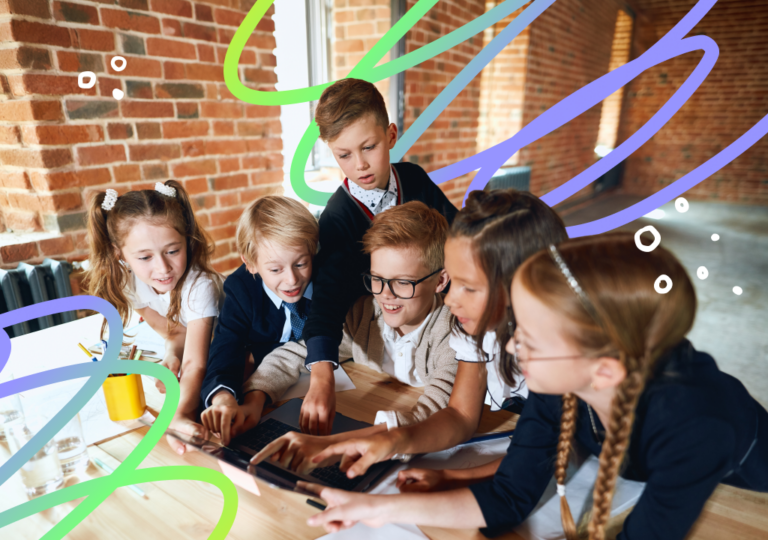
Interactive games, role-play, songs, repetition, storytelling and much more! Find out which teaching methods work best for teaching English to children online.

Check out how to make language learning fun. Try these language learning games and activities supporting different learning styles.

Motivating children to learn English can be challenging for parents or teachers from time to time, especially when the child is not willing to learn. Find out what strategies can help you keep your child’s motivation high while learning English.
We and our partners use cookies to improve your experience, personalize content and ads, and analyze traffic. By clicking 'Accept all', you agree to our use of cookies in accordance with the Cookie Policy.
You can personalize your choices by clicking on 'Cookie settings'.
We use four types of cookies on our website. You can learn more about cookies and how we use them here: Cookie Policy
Strictly necessary
Advertising
Analytics
Personalization