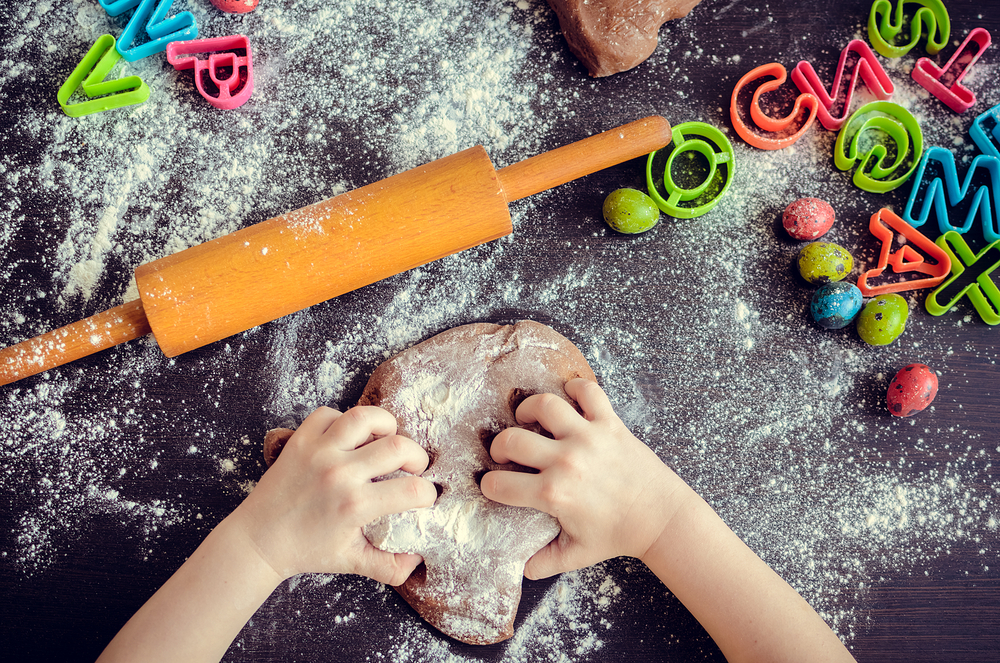
Do you like cooking? Or maybe you are more of a restaurant and takeout type? No matter which case it is, it’s always good to know how to talk about cooking in English. Cooking with children is a fun activity to do together in your free time. It also develops your child’s creativity and helps them understand the basics of measurements, textures, colors and… different cuisine from all around the world.
When cooking together with a kid, it’s all about making it fun and easy. Of course, you still need to supervise your child, especially with scissors, knives, some kitchen utensils and the kitchen stove, but give your child a lot of space for experimenting. Even if some extra flour gets into the bowl or an egg falls unintentionally on the ground – don’t make a big fuss about it.
While cooking together with your child, some essential vocabulary for small chefs may come in handy. That’s why today we listed how to name some of the most commonly found food in English to practice and use with your child during your next cooking adventure. In this article you will find English names of the most popular dishes and cooking ingredients.
Food in English – vocabulary
Here you will find all the popular ingredients that are often seen in cooking recipes. The origin of the recipe might differ, but the vocabulary used in them – not so much. Now, pick your child’s favorite recipe and check how many ingredients you can spot from the list below.
- eggs
- milk
- yogurt
- olive oil
- butter
- sour cream
- fruits
- vegetables
- meat
- fish
- rice
- pasta
- quinoa
- oats
- baking products
- flour
- nuts
- herbs
- spices
- honey
- sugar
- powdered sugar
- bread crumbs
- potato starch
- salt
- pepper
- soy sauce
Are you ready to learn more essential vocabulary for small chefs? Find out the most popular vegetables, fruit and dish names in English.
Vegetables
- asparagus
- beetroot bell peppers
- broccoli
- cauliflower
- brussels sprout
- cabbage
- lettuce
- carrots
- celery
- corn
- cucumber
- eggplant
- mushroom
- onion
- potatoes
- pumpkin
- radish
- tomato
- zucchini
- spinach
- leek
- garlic
- turmeric
Fruit
- apple
- pear
- banana
- orange
- lemon
- mandarine
- lime
- watermelon
- melon
- grape
- plum
- mango
- pineapple
- kiwi
- peach
- apricot
- kiwi
- avocado
- coconut
- blueberry
- blackberry
- raspberry
- strawberry
- cherry
- passion fruit
- papaya
- pomegranate
- grapefruit
Popular dishes
- breakfast
- lunch
- dinner
- supper
- dessert
- sandwiches
- pancakes
- scrambled eggs
- salad
- pizza
- pasta
- ice-cream
- tomato soup
- chicken soup
- chicken breast
- steak
- dumplings
- risotto
- quiche
- french fries
- vegetarian meal
- side dish
- main course
- sushi
- stir-fry
- cake
- oatmeal
- cereal
Is the vocabulary listed here not enough? Check out Novakid’s YouTube channel for kids and subscribe for more! In this short video-lesson, you can learn how to prepare for a picnic. Use the vocabulary you already learned and combine it with new words from the video. Watch it with your kid and… get ready for a real picnic in the park!
Useful cooking verbs in English
Have you ever wondered which cooking terms are essential while talking about meal preparation? The following list contains the most common cooking verbs in English, which may come in handy when testing new recipes with your kid. Be creative and experiment in the kitchen. Cooking together with children is a lot of fun, both for the adults and the little ones.
- to cook
- to grill
- to broil
- to barbecue
- to gratin
- to fry
- to bake
- to roast
- to steam
- to toast
- to microwave
- to heat up
- to add
- to slice
- to chop
- to drain
- to dice
- to pour
- to beat
- to break
- to grease
- to combine
- to mince
- to peel
- to dissolve
- to whisk
- to layer
- to roll out
- to cut
- to melt
- to spread
- to taste
- to mix
- to weigh
Learning English doesn’t have to be boring and based on just learning the vocabulary by heart. At Novakid we have a completely different approach to teaching children. Lessons are engaging, fast-paced and last just 25 minutes, making it easier for children to maintain focus and retain the material. The topics presented during each lesson are introduced in a fun and engaging way, mostly through games, songs, rhymes and communication with native teachers, in a fun virtual classroom.
If you want to learn more about Novakid’s approach to teaching English, check the dedicated YouTube channel for parents.
Did you like the article?