Consigli efficaci per crescere un bambino bilingue. Scopri cosa è davvero il bilinguismo e i vantaggi e i miti da sfatare sul bilinguismo.





Nell’articolo che stai per leggere, parleremo di avverbi di tempo e non solo! Sì, esatto: scopriremo insieme quali parole ed espressioni si usano in inglese per specificare il momento in cui si svolge un’azione, oppure la sua durata, o anche quanto spesso si ripete un evento o una situazione. Vedremo tanti esempi, tabelle e anche gli errori più comuni. E poi termineremo con un paio di esercizi.
Insomma, ti diamo il benvenuto nel mondo delle espressioni di tempo in inglese, con questo articolo scritto per te dagli esperti Novakid, la scuola di inglese online per bambini N.1 in Europa.
Cominciamo! 🚀
⌚ In grammatica, chiamiamo “espressione di tempo” in inglese una parola o una frase che ci dice quando si verifica un evento, viene svolta un’ azione o per quanto tempo dura una situazione.
In altre parole, in un discorso gli indicatori temporali danno una risposta ad alcune specifiche domande:
✔️Quando? I met Tom three years ago (Ho conosciuto Tom tre anni fa).
✔️Da quando / Da quanto tempo? I’m working now and I have been working since 7 this morning (Sto lavorando / lavoro da stamattina alle 7).
✔️Per quanto tempo? Laura will be on vacation for the next three months (Laura sarà in viaggio per i prossimi tre mesi).
✔️Con quale frequenza / Quanto spesso? My mother practices yoga every day (Mia madre fa yoga tutti i giorni).
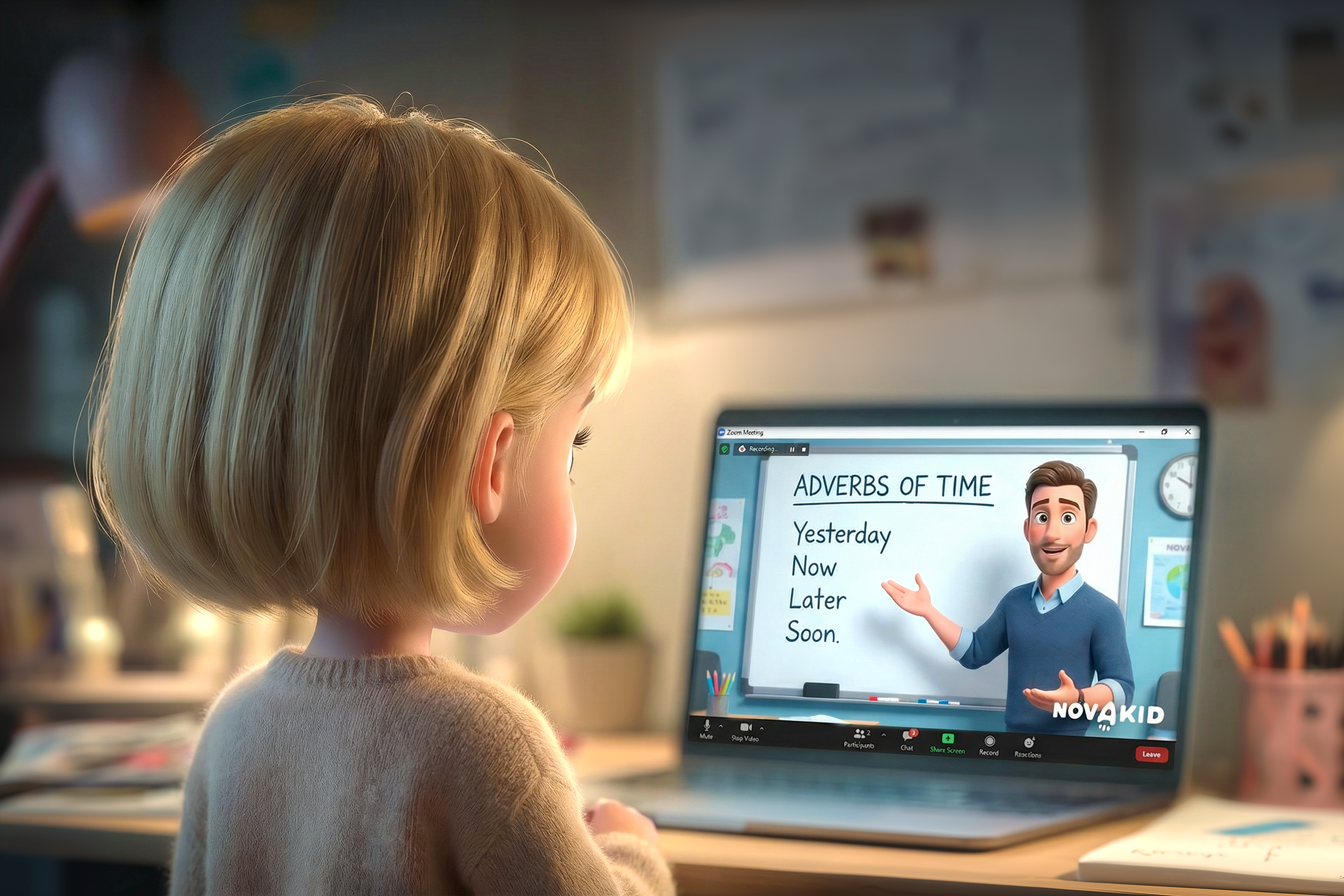
👉 Come avrai già capito, i marcatori temporali inglesi possono riferirsi al passato, al presente e al futuro.
Per cominciare, dai un’occhiata a queste frasi, esempi tratti da canzoni famosissime🎵:
Ecco, tutte le frasi qui sopra contengono delle espressioni temporali che, come puoi vedere, sono di diversi tipi:
✔️ avverbi di tempo (adverbs of time): yesterday, never, before, always, already…
✔️ adverbials: all night, a hundred years, every morning…
✔️preposizione di tempo + nome: for hours, since 2024, on Monday…
💡Per saperne di più: dai un’occhiata ai nostri articoli sugli avverbi e soprattutto sulle preposizioni di tempo in inglese. In quest’ultimo articolo troverai tanti esempi di uso delle preposizioni in, at, on che sono spesso usate per costruire espressioni di tempo.
Nello schema qui sotto abbiamo ricapitolato alcune fra le più comuni espressioni temporali inglesi, accompagnate dal loro significato e da un’altra importante informazione: il tempo dei verbi che di solito l’accompagna.
Infatti, per collocare nel tempo un evento o per indicarne la durata o la frequenza delle azioni, abbiamo bisogno di due elementi:
marcatore temporale ➕ tempo del verbo principale
Guarda qui👇
| Tempo verbale | Avverbio di tempo / Preposizione di tempo | Traduzione | Esempio |
| Present simple | Every hour/day/month/week/year Always, Sometimes Never Rarely Often Frequently Seldom Usually | Ogni ora / giorno / mese / settimana / anno Sempre Qualche volta Mai Raramente Spesso Frequentemente Raramente Di solito | I go jogging every day. Laura rarely calls her parents. The sun always sets in the west. Every summer we go on vacation to France. Tom usually drives to work. |
| Present continuous | Now Right now At this moment Still | Ora/adesso Proprio ora In questo momento Ancora. | The kids are sleeping now. Laura is taking the exam right now. I’m still working. |
| Present perfect | Just For Since Never Already Yet Lately Recently For Since Many/ a few / several / two etc times | Solo Per Da /da quando Mai Già Ancora Ultimamente, Recentemente Per Da Molte / alcune / diverse / due ecc. volte | I have studied English for two years / since 2022. I have been to the United States several times. The children have already eaten. My son has not graduated yet. Recently, my mother has started exercising again. |
| Present perfect continuous | For Since Lately Recently All day All day long | Per Da quando Ultimamente Di recente Tutto il giorno | I have been working here for seven years. My family has been living in Barcelona since 2015. I have been working all day, I’m tired! I have been sleeping little and badly lately. |
| Past simple | Yesterday, The day before yesterday Last week / month / year The other day # days / weeks / month / years etc ago In month /year | Ieri L’altro ieri L’ultima settimana /mese / anno L’altro giorno # giorni / settimane /mesi / anni fa Nel mese/anno. | We left the day before yesterday. Colette moved to London three years ago I went to the gym three times last week. My parents were married in 1979. |
| Past continuous | All the time All night All day Yesterday at this time Yesterday morning / afternoon / evening At | Tutto il tempo Tutta la notte Tutto il giorno Ieri a quest’ora Ieri mattina / pomeriggio / sera Alle | I was sleeping all the time, I didn’t hear anything. Yesterday at this time I was flying to London. At seven o’clock in the evening, my father was coming back from work. |
| Future simple | Tomorrow Next week / month / year In # hours / days / weeks / months / years One of these days This month / week / afternoon / year Someday On Monday, Tuesday etc In # days / weeks / months / years | Domani La prossima settimana / mese / anno Tra # ore/ giorni / settimane / mesi / anni Uno di questi giorni Questo mese / settimana / pomeriggio /anno Un giorno Lunedì, martedì etc. Fra # giorni / settimane / mesi / anni | We are getting married next month. In three months I will be 18 years old. I will visit you one of these days. The exam will be next Thursday. I will leave in two weeks |
| Future continuous | In # days / week / months / years time This time tomorrow # days / months / weeks / years from now | Fra # giorni / settimana / mesi / anni A quest’ora domani | By this time tomorrow I will be flying to New York. Three years from now I’ll be studying medicine. In three months time I will be living in Paris. |
| Future perfect | By Before | Per Prima di | I will have finished the test before 2 o’clock. By that time I will have left. |
Hai visto che ogni tempo verbale della tabella precedente è un link? Se ci clicchi sopra, scoprirai tante informazioni in più su quella particolare verb tense.
Adesso facciamo un piccolo focus sull’ utilizzo alcuni indicatori temporali che devi conoscere per esprimerti correttamente e con precisione in inglese.
| Tempo verbale | Significati | Esempi, casi d’uso | |
| Just | Present perfect Past perfect Past simple | Appena | I’ve just met her. When you arrived, Tom had just left. I just saw him. |
| Present continuous | Ora | I’m just leaving | |
| Already | Present perfect Past perfect Past simple | Già | I’ve already eaten. We arrived at 7 o’clock, but Paul had already left. I already knew what you said. |
| Yet | Present perfect Past simple Present simple | Nelle frasi negative, non ancora | I haven’t read that book yet. She didn’t receive a call from Tom yet. We don’t yet understand what really happened. |
| Still | Present simple Present continuous Present perfect | Ancora | I’m still hungry. She’s still studying. My boss still hasn’t replied to my email. |
| For | Present perfect Present perfect continuous Future perfect Future perfect continuous | Da | I’ve lived here for a long time. We’ve been working in the UK for 10 years. I will have been here for three months on July 1st. By this time tomorrow I will have been working continuously for 24 hours. |
| Future simple Past simple | Per | I will be on the road for three weeks. I drove for three hours. | |
| Since | Present perfect Present perfect continuous Past perfect | Da | She’s been off work since Tuesday. Tom has been working here since he graduated. Since the party she had only spoken to him once. |
💡Per saperne di più: nel blog Novakid trovi tante occasioni per approfondire gli argomenti di grammatica. In questo caso, ti consigliamo di leggere il nostro post su quando e come si usano For e Since e quello su Yet, Already, Still e Just.
Si dice I will come tomorrow oppure Tomorrow I will come o ancora I will tomorrow come?🤔 Dove si mettono gli avverbi di tempo nelle frasi inglesi e in generale le locuzioni di tempo?

Ecco di seguito tre regole per non sbagliare 🤓
1️⃣In genere, gli avverbi di tempo inglese (tomorrow, yesterday, now ecc.) si mettono alla fine della frase: I will call you tomorrow.
2️⃣In particolare, gli avverbi di frequenza (seldom, rarely, often, ecc.) vanno prima del verbo principale: Julia often takes the bus to school. I have never seen anything like this. I will always love you.
3️⃣Un’espressione di tempo formata da una preposizione di tempo più altre parole (per es. by that time, in three days, at noon) o da un aggettivo con uno o più nomi (all day, last summer ecc.) può andare all’inizio o alla fine della frase, a seconda della diversa enfasi che vuoi dare alla frase: I’m leaving in a week. In a week I will be free.
Quando si usano gli indicatori di tempo in inglese, alcuni errori sono molto frequenti. Vediamo i più comuni con esempi pratici.
❌ I have seen him yesterday
✅ I saw him yesterday
👉 Yesterday si usa con il Past Simple, non con il Present Perfect.
❌ I am living here since 2020
✅ I have been living here since 2020
👉 Con since (da quando) si usa il Present Perfect.
❌ I go always to the gym
✅ I always go to the gym
👉 Gli avverbi di frequenza come always, often, never vanno prima del verbo principale.
❌ We will meet in Monday
✅ We will meet on Monday
👉 Con i giorni della settimana si usa la preposizione on.
❌ She studied for three years ago
✅ She studied three years ago
👉 Ago indica un momento nel passato e non si usa con for.
Ecco fatto, siamo arrivati alla fine della nostra spiegazione. Il tempo della teoria è finito, facciamo un po’ di pratica con un paio di esercizi.
Dal testo seguente, tratto dai paragrafi di inizio di Harry Potter and The Sorcerer’s Stone (Harry Potter e La pietra filosofale), abbiamo tolto tutti gli indicatori temporali e li abbiamo elencati sotto, in ordine alfabetico. Rimettili al loro posto, scegliendo l’elemento giusto secondo il contesto.

______________ there had been lots of pictures of what looked like a large pink beach ball wearing different-colored bonnets – but Dudley Dursley was no longer a baby, and _________ the photographs showed a large blond boy riding his first bicycle.
Yet Harry Potter was ________ there, asleep at the moment, but not __________. His Aunt Petunia was awake and it was her shrill voice that made the first noise of the day.
“Up! Get up! _______!
Harry woke with a start. His aunt rapped on the door ________.
“Are you up _____?” she demanded.
“Nearly,” said Harry.
“Well, get a move on, I want you to look after the bacon. And don’t you dare let it burn, I want everything perfect ________________.”
About_________________, Uncle Vernon looked over the top of his newspaper and shouted that Harry needed a haircut. Harry was frying eggs_____________ Dudley arrived in the kitchen
Time markers

Ten years ago, there had been lots of pictures of what looked like a large pink beach ball wearing different-colored bonnets – but Dudley Dursley was no longer a baby, and now the photographs showed a large blond boy riding his first bicycle
Yet Harry Potter was still there, asleep at the moment, but not for long. His Aunt Petunia was awake and it was her shrill voice that made the first noise of the day.
“Up! Get up! Now!
Harry woke with a start. His aunt rapped on the door again.
“Are you up yet?” she demanded.
“Nearly,” said Harry.
“Well, get a move on, I want you to look after the bacon. And don’t you dare let it burn, I want everything perfect on Duddy’s birthday.”
About once a week, Uncle Vernon looked over the top of his newspaper and shouted that Harry needed a haircut. Harry was frying eggs by the time Dudley arrived in the kitchen
Adesso per ogni domanda scegli la risposta giusta fra quelle proposte.
1B, 2B, 3C, 4C, 5B
Quello che hai letto finora è solo un assaggio del metodo Novakid, che puoi scoprire davvero soltanto facendo una lezione di prova con un insegnante madrelingua: è gratis, non ti impegna all’iscrizione e ti permette di scoprire gratuitamente il livello di inglese di tuo figlio o tua figlia
🤩 PRENOTA UNA LEZIONE DI PROVA GRATUITA ADESSO 🤩


Guida gratuita all’alfabeto + schede stampabili per esercitarsi a casa
Inviando il modulo, accetti la Privacy Policy di Novakid. Il sito è protetto tramite reCAPTCHA e si applicano l'informativa sulla privacy e i termini di servizio di Google
I marcatori temporali, detti anche espressioni di tempo o indicatori temporali, sono utilizzati per indicare relazioni temporali, durata, sequenze di un’azione o una situazione. Ci aiutano a organizzare gli eventi, a comunicare gli orari e a comprendere lo scorrere del tempo. Che esprimano momenti specifici (today, tomorrow, now), durata (for an hour) o frequenza (always, never) essi sono essenziali per trasmettere concetti temporali nei vari contesti.
I marcatori temporali sono parole o espressioni che indicano quando o per quanto tempo avviene un’azione. Possono essere di tipo diverso e appartenere a diverse categorie grammaticali ma hanno la stessa funzione: collocare un evento nel tempo (passato, presente o futuro).
Esempi comuni:
– Avverbi: now (ora), yesterday (ieri), always (sempre)
– Espressioni: during the summer (in estate), after dinner (dopo cena)
– Preposizioni di tempo: at 3 o’clock, on Monday, in May, by next week.
I marcatori temporali (time markers) sono parole o espressioni che indicano quando, per quanto tempo o con quale frequenza avviene un’azione. Possono essere avverbi (yesterday, now, always), espressioni temporali (last night, every day) o strutture con preposizioni (since 2020, on Monday, for two hours).
Gli indicatori di tempo sono parole che aiutano a collocare un’azione nel passato, presente o futuro. Alcuni esempi comuni sono yesterday, today, tomorrow, already, never, since, for, every day, last week. Spesso vengono usati insieme a specifici tempi verbali per rendere la frase più precisa.
Consigli efficaci per crescere un bambino bilingue. Scopri cosa è davvero il bilinguismo e i vantaggi e i miti da sfatare sul bilinguismo.

Quello che devi sapere per parlare del passato in inglese. Scopri il tempo passato inglese da usare in ogni situazione. Con tabelle, esempi ed esercizi online

Impara come usare la virgola in inglese e la punteggiatura corretta con esempi pratici, regole e esercizi per migliorare la scrittura.

“L’inglese non mi piace”. Che dispiacere sentire mio figlio ripetere questa frase. L’inglese serve per lavorare, scoprire il mondo, sentirsi sicuri di sé. A me ha portato tante cose belle: studio all’estero, lavoro con aziende di tanti paesi, cari amici in altri paesi, viaggi. Ma capisco mio figlio.

Scopri tutto sugli articoli in inglese: determinativi e indeterminativi, zero article, a oppure an, differenze con l’italiano ed esercizi facili per migliorare il tuo inglese.

Scopri gli stative verbs cosa sono, perché sono diversi dagli action verbs e quali verbi sono sia stativi sia di azione. Con test online e Tabella PDF
Una spiegazione semplice dei pronomi relativi in inglese (who, which, that). Esempi facili ed esercizi scaricabili per bambini e bambine.

Tutto quello che ti serve sul Past Perfect: esempi, esercizi online e una scheda di grammatica. Clicca e impara a usare il Past Perfect come un madrelingua

Il verbo make in inglese forma phrasal verbs diversi molto comuni. Clicca e scopri significato e uso del verbo, tante frasi con make, esercizi online gratis
Noi e i nostri partner utilizziamo i cookie per migliorare la tua esperienza, personalizzare contenuti e annunci e analizzare il traffico. Facendo clic su "Accetta tutti", accetti l'uso dei cookie in conformità con la Politica sui cookie.
Puoi personalizzare le tue scelte facendo clic su "Impostazioni dei cookie".
Nel nostro sito web usiamo quattro tipi di cookie. Puoi scoprire di più sui cookie e su come li utilizziamo qui: Politica sui cookie
Strettamente necessari
Pubblicità
Statistici
Personalizzati